If you’re a livestock producer, feed mill operator, or someone who’s ever stayed up late troubleshooting a batch of poorly mixed poultry or swine feed, you know how critical feed mixing equipment is to your operation. I’ve spent the last 12 years selling and supporting feed mixing equipment—most of it working directly with farmers and mill managers across the Midwest and parts of Canada, and I can tell you that 7 out of 10 delays, damage claims, and extra costs related to new mixing gear start long before the machine ever gets unloaded at your site. It all boils down to the transportation requirements that most buyers don’t think to ask about until it’s too late. Feed Mixing Equipment
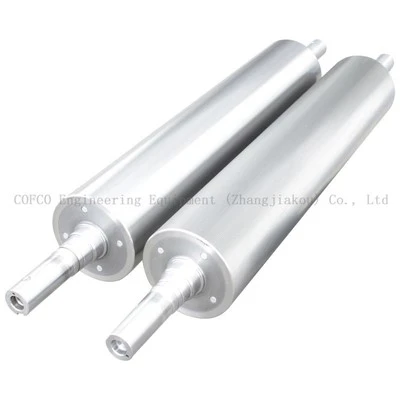
Let’s start with the basics: feed mixing equipment isn’t a single, one-size-fits-all box you can toss on a flatbed. We build units that range from 5 cubic foot laboratory mixers for small hobby farms to 1500 cubic foot bulk mixers for large commercial feed mills, and each has its own unique transportation needs. Early in my career, I watched a dairy farmer out in Iowa take delivery of a 60 cubic vertical mixer we’d sold him. He rented a local flatbed that was only 20 feet long, and even though the unit itself measured just 18 feet, the tachometer shaft that stuck out the back—something we usually detach for transport—wasn’t removed. By the time the truck got to his farm, that shaft had been snapped off by a low-hanging power line, costing him $1,200 in repairs and a three-day delay to his milk supplement batch. That mistake could have been avoided if we’d walked him through the transportation requirements before he scheduled delivery.
First, you have to factor in dimensional constraints, and that’s not just about length. Most U.S. states have commercial vehicle width limits of 8.5 feet, height limits of 13.5 feet, and maximum weight limits of 80,000 pounds for standard flatbed or step-deck trailers. Our standard 200 cubic foot horizontal mixer, for example, weighs around 42,000 pounds fully assembled and measures 10 feet wide, 12 feet high, and 32 feet long. That fits nicely within standard limits, but once you get into the bulk mixer category, those numbers jump fast. The 1000 cubic foot mixers we build for large feed mills often tip the scales at 120,000 pounds when fully assembled, with a width of 11 feet and height of 14 feet. That means you can’t use a standard flatbed—you need a specialized heavy-haul trailer, and you’ll need overweight permits in every state the trailer crosses through. Too many buyers assume their local trucking company can handle it, but in 2019, a feed mill in Illinois tried to move a 800 cubic foot mixer on a standard step-deck and got stopped at the Indiana state line, paying $4,500 in stop-work fines and rerouting fees just because they forgot to check the dimensional and weight requirements for cross-state transport.
Then there’s the delicate components part. Feed mixing equipment has moving parts that aren’t built to be jostled around. Our mixers use high-torque motors, gearboxes, and specialized mixing paddles that are calibrated to within 1/8 of an inch to ensure uniform mixing—something that’s non-negotiable, because even a tiny misalignment can lead to hot spots in feed, which can cause nutrient loss or even safety issues with medicated feeds. That means when transporting, you can’t just chain the mixer down and go. For smaller units, we require that all loose parts—like the mixing paddle shafts, control panels, and auxiliary augers—are crated or removed and secured separately. We also recommend using air-ride trailers instead of standard steel-floor flatbeds, because the cushioned ride reduces vibration that can throw off alignment. I learned this lesson after a 2018 delivery to a swine operation in Minnesota: we sent a horizontal mixer on a steel flatbed, and by the time it arrived, the gearbox mount had been loosened from vibration, requiring $2,800 in on-site repairs that the carrier refused to cover. Now we mark all our unit’s fragile components with high-visibility orange tags in the factory, and we include a transportation checklist with every new sale, so our clients know exactly what needs to be done.
Another big factor many buyers overlook is access to the delivery site itself. A lot of people assume that if a truck can get to the road, it can get to the farm or mill, but that’s rarely true. Our largest bulk mixers require a trailer that’s 53 feet long, and even that can’t navigate tight, narrow farm roads with sharp turns, especially if the road is covered in mud or gravel during wet seasons. We had a client in Ohio a few years back who bought a 500 cubic foot mixer, and his farm entrance had a 90-degree turn that was just 48 feet wide. The trailer got stuck halfway through the turn, and we had to bring in a specialized rotating heavy-haul trailer to pull it out, costing the farmer an extra $1,800. We now offer a pre-delivery site assessment for all our clients that involves talking to them about their road widths, load limits on any bridges along the route, and even the height of any overpasses or power lines near their property. That assessment takes less than an hour, but it saves everyone a ton of money and stress later.
Then there’s regulatory compliance, both at the state and federal level. In the U.S., the Federal Motor Carrier Safety Administration (FMCSA) has specific rules for oversized or overweight loads, including required escort vehicles, signage, and travel times (most states ban oversized loads from traveling during peak rush hours or after dark on certain highways). For international buyers—wait, we work with clients in Canada and Mexico too, right?—there’s even more to consider, like customs documentation requirements for the equipment, and compliance with each country’s transport regulations. Last year, a client in Alberta ordered a 300 cubic foot mixer from us, and he didn’t realize that Canadian transport rules require a separate permit for loads crossing the border, plus a licensed carrier that’s registered in Canada. We help them sort through all that, because half the battle is making sure the load is legal before it hits the road.
I also want to talk about something specific to our equipment: the handling of medicated feed components during transport, though that’s more related to how the mixer is set up once it arrives, but wait—no, actually, when you’re moving a mixer that’s designed for medicated feeds, you have to make sure that the transport process doesn’t introduce cross-contamination, which can be a big deal for producers working with antibiotics or other regulated additives. We seal all internal components of our mixers that come into contact with medicated feeds during transport, and we provide detailed cleaning instructions so that the trucking company doesn’t have to worry about leftover feed dust mixing with other cargo or other loads. That’s a requirement we didn’t always emphasize early on, but after a client in Missouri had a cross-contamination issue that led to a $15,000 fine from the FDA, we made it a non-negotiable part of our transportation guidelines.
Let me wrap this up with what I tell every new client before they book a delivery. First, know your equipment specs before you call a trucking company—don’t guess at weight, length, or height. Second, plan your site access weeks in advance, especially if you’re in a rural area with narrow roads. Third, never remove any components without checking with us first—those parts that stick out might be easy to leave on, but they can get damaged or cause accidents. Fourth, ask for a copy of the state and federal transport rules for your area, and make sure your carrier is familiar with them. Fifth, if you’re working with medicated feeds or have special mixing requirements, let us know early so we can adjust the transport setup to avoid issues later.

I’ve been in this business long enough to see that the best feed mixing equipment in the world is useless if it gets damaged during transport, or if it shows up a week late and delays a critical feed run. That’s why we don’t just sell mixers—we support our clients through every step, including making sure their equipment gets to their site safely and on time. If you’re in the market for new feed mixing equipment, or you have questions about the transport requirements for a unit we build, reach out to our team to discuss your specific needs. We don’t believe in one-size-fits-all solutions, and we’re here to help you navigate every part of the process, from design to delivery.
Grain Conveying Equipment References:
- National Agri-Marketing Association. (2021). Guidelines for Transporting Agricultural Equipment.
- Federal Motor Carrier Safety Administration. (2022). Oversized Load Transport Regulations.
- American Feed Industry Association. (2020). Best Practices for Feed Processing Equipment Delivery and Handling.
- Transport Canada. (2023). Commercial Vehicle Transport Rules for Agricultural Equipment.
- Food and Drug Administration. (2019). Regulation of Medicated Feed Production and Handling.
COFCO Engineering Equipment (Zhangjiakou) Co., Ltd.
As one of the most professional feed mixing equipment manufacturers and suppliers in China, we also support customized service. Please feel free to wholesale advanced feed mixing equipment for sale here from our factory. Quality products and reasonable price are available.
Address: No.4 ZhongLiang Street, high-tech industrial development zone, Zhangjiakou, Hebei, PRC
E-mail: mayihui@cofco.com
WebSite: https://www.ceeflourmill.com/
