Hey everyone, Sarah here, your go-to control cable supplier who’s spent the last 8 years getting hands-on (and sometimes grease-stained) with all things control cables. Today we’re talking about something that a lot of folks reach out to me about when they’re out in the field: UV radiation. It seems like such a small, often overlooked thing, but I’ve seen so many projects go sideways because they didn’t account for UV damage to their control cables. Let’s break this down like we would over a coffee after a long site walk—no stuffy jargon, just real talk and the stuff I’ve actually learned from working with hundreds of installers and maintenance teams across the country. Control Cable

First off, let’s get on the same page about what we’re dealing with here. UV radiation isn’t just that stuff that makes you burn at the beach; it’s the high-energy part of sunlight (about 5% of the sun’s total energy) that penetrates the earth’s atmosphere. And if you’re running control cables in places like rooftop facilities, outdoor industrial sites, solar farms, construction sites, or even just along the exterior of a building that doesn’t have a lot of shade? That UV is hammering those cables 24/7, especially during the summer months when days are longer. Most people don’t realize that control cables aren’t designed the same way as, say, regular power cables. They’re built to carry low-voltage signals—think data, sensor inputs, control commands for motors, pumps, or HVAC systems—so their outer jacket is a critical line of defense that’s often not built for prolonged sun exposure.
Let’s start with the obvious (but super important) effect: jacket degradation. The outer jacket on most standard control cables is usually made of PVC, right? PVC is cheap, flexible, and works great for indoor use or places that stay covered. But leave PVC out in the sun for too long, and that UV starts breaking down its molecular structure. I’ve seen this first-hand on a solar farm project in Arizona a couple years back—they used standard PVC control cables because the installer said “it’s just a low-voltage cable, can’t be that bad.” Six months later, when they went to inspect the sensor cables for the panel arrays, the jacket was chalky, cracked, and peeling off like old paint. It was so bad that some of the cables had exposed copper strands hanging out, which meant signal loss, short circuits, and they had to replace 3 miles of cable way earlier than budgeted. That’s the stuff that keeps me up at night as a supplier—knowing I could’ve helped them avoid that mistake if they’d reached out earlier.
Why does UV break down PVC specifically? UV photons are high enough energy to break the chemical bonds that hold the polymer chains of PVC together. Over time, this makes the jacket brittle, loses its flexibility, and becomes prone to cracking. Once there’s a crack, moisture and dust can get inside the cable, which messes with the internal insulation. For control cables, even tiny signal interruptions are a big deal—like if a sensor cable for a water treatment plant cracks, it could mean wrong readings for pH levels, leading to equipment malfunctions or even regulatory issues. I had another client in Texas last year who had a similar PVC cable failure on an outdoor pump control system; they thought the pump was broken, but it turned out the control signal was being lost because the jacket had cracked, and moisture was causing a short. Fixing that required digging up underground cables (which was a nightmare) and replacing the broken ones with UV-resistant options—costing them twice as much as if they’d just ordered the right cables from the start.
Now, it’s not just PVC that gets hit by UV. Some people use other jackets, like polyurethane (PU) or even rubber, for outdoor applications, but even those aren’t all created equal. Standard PU jackets can also degrade under prolonged UV exposure, just slower than PVC. Natural rubber is the worst—leave that out in the sun for a few months and it becomes rock hard, then crumbles when you touch it. We had a construction contractor reach out to me a while back who’d used standard rubber control cables for temporary outdoor power controls for a highway project. After 8 weeks of working 12-hour days under the hot sun, the cables were so brittle that when they tried to move a section, half of them snapped in two. That’s not just a hassle; that’s work stoppage, missed deadlines, and extra labor costs that no one wants to deal with.
But wait, it’s not just the jacket. UV radiation can also affect the internal components of control cables if the jacket is compromised. The insulation on the individual conductors inside the cable is usually made of materials like polyethylene (PE) or cross-linked polyethylene (XLPE). While these are more durable than PVC, prolonged UV exposure through a cracked jacket can still break down their molecular structure, leading to insulation resistance issues. That means the signal being carried through the cable gets weaker, or even bleeds into adjacent cables, causing crosstalk. For critical systems like nuclear plant controls or medical facility equipment, crosstalk or signal loss can be a safety hazard, not just an inconvenience. I’ve also seen cases where UV exposure leads to discoloration of the internal components, which might not seem like a big deal, but it’s a sign that the material is breaking down from the inside out—by the time you see the discoloration, the damage is already done.
Another big one: shrinkage. Yeah, you read that right. UV radiation can cause control cable jackets to shrink, which might not sound like a huge deal, but it is. If a cable is shrunk, it puts tension on the internal conductors, which can lead to breakage over time. I had a client with a rooftop HVAC system where the control cables had shrunk so much that they were pulling the sensors out of their mounting brackets. They spent hours troubleshooting the sensors, thinking they were faulty, before realizing the cables had shrunk under the summer sun. That’s the kind of avoidable problem that comes from not paying attention to UV effects on control cables.
Now, let’s talk about what actually makes a control cable UV-resistant, because that’s the part that matters most for anyone ordering cables. As a supplier, this is what I recommend to all my clients, and it’s based on years of testing and real-world field data. First, look for jackets that are specifically formulated with UV stabilizers. These stabilizers work by absorbing or reflecting UV radiation before it can break down the polymer chains in the jacket. Common stabilizers include things like hindered amine light stabilizers (HALS) and benzophenones. The key here is that not all UV stabilizers are created equal—cheap stabilizers might give you 6 months of protection, while high-quality ones can give you 10+ years, depending on the environment. I only stock cables with stabilizers that are tested to meet industry standards like UL 758 or ICEA S-96-649, because those are the ones that actually perform in real conditions, not just in a lab.
Another option is to use jackets made from materials that are naturally more UV-resistant, like cross-linked polyethylene (XLPE) or fluoropolymers. XLPE is great because it’s more durable than PVC, has higher temperature resistance, and naturally stands up better to UV. Fluoropolymers like FEP or PFA are even more resistant, but they’re more expensive, so they’re usually used for more critical applications where downtime isn’t an option—like aerospace control cables or offshore industrial sites where replacing cables is way more difficult. I always tell my clients to match the cable jacket to their specific environment: if it’s a rooftop commercial HVAC system, UV-resistant PVC is probably enough. If it’s a solar farm in the desert, go with XLPE or high-grade PU. If it’s an offshore wind farm, spring for fluoropolymers—those cables have to stand up to not just UV, but saltwater, wind, and extreme temperatures too.
Pro tip from someone who’s been there: even if you order UV-resistant cables, installation matters. I’ve seen installers run UV-resistant cables right next to a rooftop vent that’s leaking hot air, which accelerates UV damage. Or run them too close to other cables that are generating heat, which combines with UV to break down the jacket faster. Also, make sure you’re using proper cable ties that are UV-resistant too—cheap plastic ties will break down in the sun and leave cables hanging loose, which can rub against each other or get damaged by debris. I always sell UV-resistant cable ties to go with the cables I supply, because it’s one less thing my clients have to worry about.
Now, let’s get real about the costs here. I know UV-resistant control cables might cost a few cents more per foot than standard cables. But let’s do the math on that Arizona solar farm I mentioned earlier. They used standard PVC cables because they were 10% cheaper per foot. But they had to replace 3 miles of cable 6 months early, which cost them not just the cost of the new cable, but also the labor to dig it up, re-install it, and the downtime during the inspection and replacement. Total cost ended up being 5 times more than if they’d just ordered UV-resistant cables in the first place. And that doesn’t even count the lost revenue from the solar farm not producing power during the replacement. I’ve had so many clients tell me after working with me that they wish they’d just bought the right cables from the start—save themselves the headache and the extra cash.
Another thing I get asked all the time: how do I test if my control cables are already being damaged by UV? If you’re out in the field, a quick visual check is a good start. Look for chalkiness on the jacket, cracks, brittleness, or shrinkage. If you can bend a cable and it cracks or doesn’t spring back, that’s a sign the jacket is degraded. You can also do an insulation resistance test with a multimeter—if the resistance is lower than it should be (check the manufacturer’s specs for your cable), that’s a sign that moisture or damage has gotten past the jacket. For longer-term monitoring, some industrial facilities use UV radiation sensors to track the amount of UV their cables are exposed to, which helps them plan for maintenance or replacement before damage happens.
At the end of the day, the biggest mistake I see people making is treating control cables like an afterthought. They focus on the big equipment—the pumps, the sensors, the controllers—and then just grab whatever cable is cheapest or they have in stock. But control cables are the nervous system of any industrial or outdoor system. If the nervous system is damaged by UV, the whole system goes down. And as someone who’s seen way too many projects suffer because of that, my job isn’t just to sell you cables—it’s to make sure you get the right cables for your specific application, whether that’s a small rooftop system or a huge solar farm or a water treatment plant.
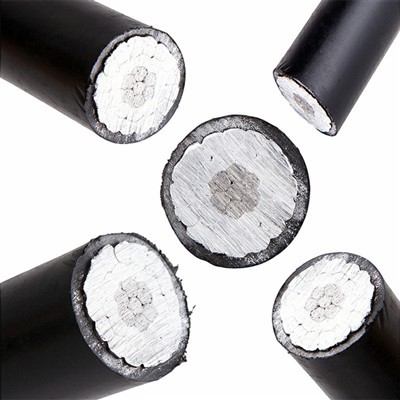
So if you’re working on a project that involves outdoor control cables, or you’re noticing some weird signal issues or cable damage on your current system, don’t guess. Don’t take the risk of using cheap cables that will fail in a year. Reach out, tell me about your project—where the cables are going, what they’re controlling, how long you need them to last—and I’ll help you pick exactly the right UV-resistant control cables for your needs. No pressure, no pushy sales talk, just real advice from someone who’s been in the field, seen the mistakes, and wants to help you avoid them.
Aluminum Clad Steel Wire References
- ICEA S-96-649, Standard for Control and Instrumentation Cables
- UL 758, Standard for Appliance Wiring Materials
- "UV Degradation of Polymeric Materials for Electrical Applications", Journal of Electrical Insulation, 2021
- Field Study: UV Exposure Effects on Outdoor Control Cables, National Electrical Contractors Association (NECA), 2022
Hebei Hualun Cable Co., Ltd.
As one of the leading control cable manufacturers and suppliers in China, we offer a wide range of products with superior quality. We warmly welcome you to buy cheap control cable for sale here from our factory. For price consultation, contact us.
Address: XINGBIEYING INDUSTRIAL ZONE, HEBEI PROVINCE CHINA
E-mail: steven@hualunchcable.com
WebSite: https://www.hualuncables.com/
