If you’ve ever been behind the wheel, cruising down a smooth highway, and suddenly felt your vehicle tugging toward the left or right without any input from your hands on the steering wheel, you know how disorienting—and even dangerous—that feeling can be. As a ball joint supplier who’s spent years talking to mechanics, fleet managers, and everyday drivers, I hear this question all the time: Can a ball joint cause a pulling sensation while driving? The short answer is yes, but it’s not as straightforward as “a bad ball joint = steering pull.” There’s a lot of engineering, wear mechanics, and real-world driving context that goes into how these small, critical parts affect how your car handles. Let me break this down the way I do for our customers—no overly technical jargon, just straight talk backed by what we’ve seen in our 10+ years of manufacturing and testing ball joints. Ball Joint
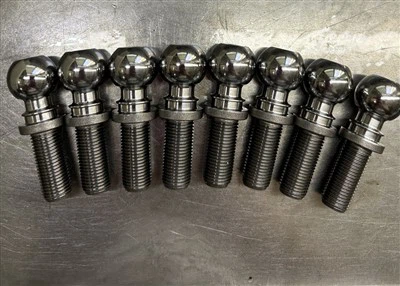
First, let’s get clear on what a ball joint actually does, because if you don’t understand its job, it’s hard to see how it could trigger a pull. Ball joints are the pivots that connect your steering knuckle to the control arm, sitting at the heart of your vehicle’s front suspension (and sometimes rear, in all-wheel-drive or independent rear setups). They let the wheels turn when you steer, absorb small bumps and road vibrations, and keep the wheel aligned straight during normal driving. A healthy ball joint has a precision-machined metal ball that fits snugly into a socket, lubricated for smooth movement, with a rubber or plastic seal to keep dirt, moisture, and road grime out. When that seal breaks, or the ball and socket wear down, that snug fit disappears—and that’s when problems start.
Now, how does that wear translate to a pulling sensation? Let’s walk through a common scenario. Say you’re driving on a flat, level road, and your steering wheel is perfectly centered. Your front wheels should be pointing straight ahead, with equal force being applied from the suspension to keep them aligned. If the ball joint on the left front control arm is worn, two things happen: first, there’s excessive play (movement) between the ball and socket. When you hit a small bump—like a pothole or a manhole cover—the worn ball joint shifts slightly, pulling or pushing the steering knuckle out of its straight alignment. Second, the uneven wear creates a difference in how much force each front wheel can handle. A good, tight ball joint transfers force evenly, but a worn one might “slip” under load—say, when you accelerate or turn slightly. That uneven force across the front axle makes one wheel track differently than the other, which your steering translates into that noticeable pull toward one side.
Wait, though—pulling can be caused by lots of other things too, right? Uneven tire pressure, misaligned wheels, worn tie rods, brake calipers that are sticking. That’s why it’s so easy for drivers to mix up what’s causing the tug. I see this all the time: a customer comes to us saying their car pulls, and they already replaced their tires and got an alignment, but the pull is still there. Nine times out of ten, after our in-house mechanics test the vehicle, they find a worn ball joint. Let me share a real example from last year: a fleet manager for a local delivery company brought in three vans that had been pulling hard to the right. They’d spent $800 total on alignments and new tires, but the problem came back within a week. We inspected the ball joints and found that all three vans had ball joints with torn seals and 2-3mm of play (our wear limit is 0.5mm, by the way). Replacing the ball joints fixed the pull completely, and the vans didn’t need another alignment for six months. That’s the kind of case that makes clear how often ball joints are the hidden culprit behind steering pulls.
It’s not just worn ball joints, though. Sometimes, a new, improperly installed ball joint can cause a pull too. I’ve had mechanics call us complaining that a set of our ball joints caused a pull on their customer’s car, only to find that they’d tightened the control arm bolts incorrectly during installation. Ball joints have to be torqued to a specific specification to make sure they sit in the control arm correctly—too loose, and you get play; too tight, and they can’t pivot freely, leading to uneven wheel movement. That’s why we include torque specs with every batch of ball joints we ship, and our customer service team is always available to walk installers through the process. We’ve also had cases where a counterfeit ball joint (something we work hard to prevent our customers from getting) has a poorly machined ball or socket, so the fit is uneven from day one, leading to immediate pulling. That’s a big part of why sourcing your ball joints from a reputable supplier matters—cheap, knockoff parts often skip the precision machining that keeps your suspension aligned.
Another less obvious way ball joints cause pulling: progressive wear over time. A lot of drivers wait until their ball joints make a clunking noise when going over bumps before replacing them, but by that point, the wear is often advanced enough to cause steering pulls. We test our ball joints in our lab to simulate 150,000 miles of driving—hitting bumps, turning, accelerating, braking—and we track how much play develops over time. What we’ve found is that ball joints start developing significant play (enough to cause a pull) after about 80,000 miles for most passenger vehicles, depending on driving conditions. If you drive a lot on gravel roads or in areas with lots of salt in the winter, that wear happens even faster—salt eats through seals, letting moisture and dirt get into the ball joint, accelerating corrosion and wear. That’s why regular inspections (every 30,000 to 50,000 miles) are so important—catching wear early can prevent not just pulling, but worse problems like wheel separation, which is extremely dangerous.
Wait, let’s get back to the science to make sure we’re not missing anything. When a ball joint wears, the caster and camber angles of the wheel can shift. Caster is the angle of the steering axis relative to vertical, and it helps the wheel return to center after turning. Camber is the angle of the wheel relative to the road, and it affects tire wear and handling. If a worn ball joint makes the caster or camber angle unequal between the two front wheels, that creates a pull because each wheel is working differently. For example, if the left front wheel has negative camber while the right has neutral, the left wheel will have more tire contact with the road on the inner edge, creating uneven resistance, which pulls the car left. That’s a key point—ball joints aren’t just connecting parts; they’re integral to maintaining the suspension angles that keep your car going straight.
I know some drivers might be thinking: “If a worn ball joint is causing the pull, why does it only happen sometimes? Why doesn’t my car pull all the time?” That’s a great question, and it ties directly to the type of wear. If the ball joint only has side-to-side play (common in upper ball joints on rear-wheel-drive vehicles), it might only cause a pull when you accelerate or brake, because that’s when there’s force pushing on the wheel. If it has up-and-down play (common in lower ball joints on front-wheel-drive cars), it might cause a pull only when going over bumps, because that’s when the suspension moves. We saw this with a 2019 sedan customer last year: his car would pull only when he drove over speed bumps, and the pull got worse when he turned left. After inspecting, we found the lower left ball joint had 1.8mm of up-and-down play—exactly the kind that only shows up during suspension compression. Replacing that one ball joint fixed the pull completely, and he didn’t have to replace the right side, since it was still within our wear limit.
Now, let’s address the myth that a ball joint pull is always a major, imminent safety risk. It can be, but early signs are subtle. A lot of drivers mistake a small pull as just “the road being uneven.” That’s why we tell customers to test it: if you let go of the steering wheel for two seconds on a flat, straight road, and the car moves more than an inch left or right, that’s not the road—that’s a problem. If it’s a worn ball joint, catching it early means you don’t have to replace multiple parts (like we saw with the fleet vans that wasted money on unnecessary alignments and tires) and you don’t risk a breakdown. We’ve had customers who waited too long to replace a ball joint, and the wear got so bad that the ball separated from the socket while driving—thankfully no one was hurt, but that’s a avoidable risk.
As a ball joint supplier, our job isn’t just to sell parts—it’s to make sure drivers and mechanics understand how these parts work, so they can catch problems before they become dangerous. We’ve built our business on being transparent about what causes suspension issues, because we know that trust is what keeps customers coming back. That’s why we share our lab data, our wear thresholds, and our real-world case studies with anyone who asks. We also offer technical support for mechanics and DIYers, because we know that even the best parts won’t work if they’re installed incorrectly.
So, to circle back to the original question: yes, a worn, damaged, or improperly installed ball joint can absolutely cause a pulling sensation while driving. It’s not the only cause, and it’s not always the first thing you think of when your car tugs, but it’s one of the most common hidden culprits. If you’re experiencing steering pull, don’t just assume it’s your tires or alignment. Have a professional inspect your ball joints—check for torn seals, play, and uneven wear. And if you do need to replace your ball joints, make sure you source high-quality parts from a supplier that stands behind their products, like we do.
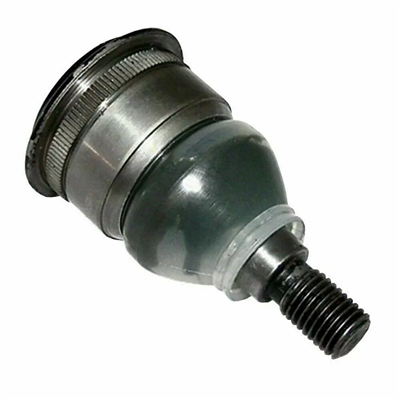
I’ve been in this industry long enough to know that steering issues can make or break a driver’s day—even a small pull can make a commute stressful, and a missed problem can lead to a dangerous situation. That’s why we engineer every ball joint we make to meet or exceed OEM specifications, use corrosion-resistant seals, and test every batch before it ships. If you’re a mechanic looking for a reliable ball joint supplier, a fleet manager needing bulk parts for your vehicles, or a DIYer working on your car, we’d be happy to discuss your needs, share more technical details, or send you sample parts for testing. Don’t let a worn ball joint turn a simple drive into a stressful experience—reach out to us to talk through your steering concerns and find the right solution for your vehicle.
Upper Ball Joint References
- National Highway Traffic Safety Administration. (2021). Vehicle Suspension and Steering System Safety Recalls and Defect Reports. U.S. Department of Transportation.
- Society of Automotive Engineers. (2019). Ball Joint Wear Characteristics and Suspension Alignment Variability in Passenger Vehicles. SAE International Journal of Passenger Cars – Mechanical Systems, Vol. 12, Issue 3.
- Automotive Aftermarket Suppliers Association. (2022). Ball Joint Inspection and Replacement Best Practices for Light Duty Vehicles. AASA Maintenance and Repair Council.
- Ford Motor Company. (2020). 2015-2020 F-150 Suspension Ball Joint Service Manual. Ford Technical Publications.
- International Organization for Standardization. (2018). Road Vehicles – Suspension Components – Test Methods for Ball Joints. ISO 11215:2018.
Taizhou Huazhe Auto Parts Co., Ltd.
As one of the most professional ball joint manufacturers and suppliers in China, we’re featured by quality products and low price. Please rest assured to buy bulk high-grade ball joint in stock here from our factory. For pricelist, contact us now.
Address: No. 2828, Binkang Avenue, Sanjia Street, Taizhou Bay New Area, Taizhou City, Zhejiang Province
E-mail: 19906762800@163.com
WebSite: https://www.huazheindustry.com/
