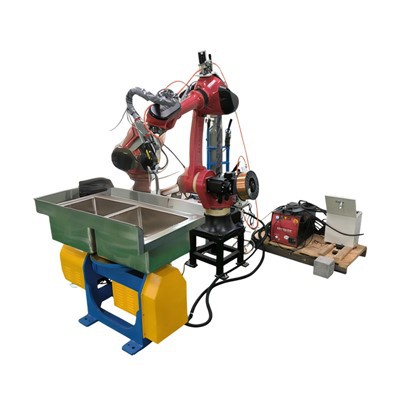
Hey there, fellow welders and industry folks! I’m a supplier in the welding robot game, and I know how tough it can be to pick the right welding robot for your needs. There are so many options out there, and it’s easy to get overwhelmed. But don’t worry, I’m here to break it down for you and help you make an informed decision. Welding Robot
Understanding Your Welding Needs
First things first, you need to have a clear idea of what you’re going to use the welding robot for. Are you working on small, precision parts, or are you tackling large-scale industrial projects? The type of welding you’ll be doing, like MIG, TIG, or spot welding, also matters a lot.
If you’re in the automotive industry, for example, you’ll probably need a robot that can handle high – speed, repetitive welding tasks with extreme precision. On the other hand, if you’re in the custom fabrication business, you might need a more flexible robot that can adapt to different part geometries.
Think about the materials you’ll be welding too. Different metals, like steel, aluminum, or stainless steel, require different welding techniques and settings. A good welding robot should be able to adjust to these variations easily.
Payload and Reach
Payload is how much weight the robot can handle. You’ve got to make sure the robot can carry the welding torch, any additional equipment like wire feeders or sensors, and the part you’re welding. If you try to overload the robot, it won’t perform well and could even break down.
Reach is all about how far the robot’s arm can move. You need to measure the size of the work area and the parts you’ll be welding. A robot with a short reach won’t be able to access all parts of a large workpiece, and a robot with too long a reach might be overkill and cost more.
Precision and Accuracy
In welding, precision is key. You want a robot that can place the weld exactly where it needs to be, every single time. Look at the robot’s repeatability, which is how closely it can return to the same position. A high – repeatability robot will give you consistent welds, reducing the need for rework.
Accuracy is also important. It refers to how close the actual weld is to the programmed path. A robot with high accuracy will produce better – looking and stronger welds.
Speed and Productivity
If you’re running a production line, speed is a major factor. A fast – welding robot can increase your output and reduce production time. But don’t just focus on speed alone. You also need to consider the quality of the welds. A robot that welds too fast might produce poor – quality welds, which will only cost you more in the long run.
Some robots come with features that can optimize the welding speed, like advanced motion control systems or real – time feedback sensors. These features can adjust the welding speed based on the material, joint type, and other factors, ensuring both speed and quality.
Ease of Programming
No one wants to spend hours or days learning how to program a new welding robot. Look for a robot with an intuitive programming interface. Some robots use teach pendant programming, where you physically move the robot’s arm to the desired positions, and the robot remembers the path. This is a simple and straightforward way to program, especially for beginners.
Other robots offer offline programming, which allows you to create welding programs on a computer without interrupting the production line. This can save a lot of time and increase efficiency.
Integration with Existing Systems
Chances are, you already have some equipment in your workshop, like welding power sources, conveyor belts, or handling systems. You need to make sure the new welding robot can integrate smoothly with these existing systems.
For example, the robot should be able to communicate with your welding power source to adjust the welding parameters automatically. It should also be compatible with your conveyor belts or handling systems to ensure a seamless workflow.
Maintenance and Support
Like any piece of equipment, welding robots need maintenance. You want to choose a robot that’s easy to maintain. Look for features like easy – access maintenance panels, self – diagnostic systems, and replaceable parts.
Also, consider the support you’ll get from the manufacturer. A good manufacturer should offer technical support, training programs, and a reliable supply of spare parts. You don’t want to be stuck with a broken robot and no way to fix it quickly.
Cost – Benefit Analysis
Of course, cost is a major consideration. But don’t just go for the cheapest option. You need to do a cost – benefit analysis. Consider the upfront cost of the robot, the cost of installation and training, the cost of maintenance and spare parts, and the potential savings in production time and labor costs.
A more expensive robot might have better features, higher precision, and longer lifespan, which could result in greater savings in the long run.
Safety Features
Safety should always be a top priority. A good welding robot should have safety features like emergency stop buttons, safety sensors, and protective enclosures. These features can prevent accidents and protect your workers.
Test and Demo
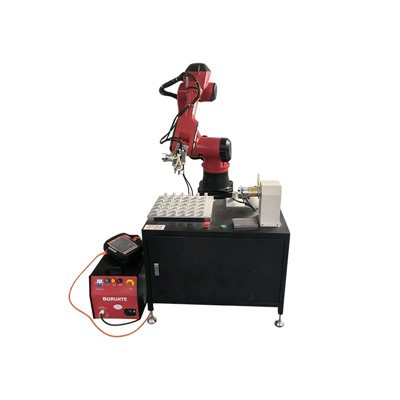
Before you make a final decision, try to get a test or demo of the welding robot. This will give you a chance to see how the robot performs in real – life situations. You can also ask questions and get a better understanding of the robot’s capabilities and limitations.
Spray Painting Robot So, there you have it! These are the key factors to consider when choosing the right welding robot. If you’re still not sure or need more advice, don’t hesitate to reach out. As a welding robot supplier, I’m here to help you find the perfect robot for your business. Whether you’re a small – scale workshop or a large industrial plant, we’ve got the expertise and the range of products to meet your needs. Contact me for a consultation and let’s start talking about how we can improve your welding process.
References
- "Welding Robotics: Technology, Applications, and Programming" by Peter G. Maropoulos and Peter J. Scott
- "Industrial Robotics: Technology, Programming, and Applications" by Groover, Mikell P.
- Industry whitepapers on welding automation and robotics.
Dongguan Chuanglida Intelligent Equipments Co., Ltd.
As one of the most professional welding robot manufacturers and suppliers in China, we also support customized service. Please feel free to buy discount welding robot in stock here from our factory. For price consultation, contact us.
Address: Room 201, Building 2, No. 61, Shachang 1st Road, Dalang Town, Dongguan City, Guangdong Province
E-mail: haoguangli001@outlook.com
WebSite: https://www.boruntestech.com/
