As a supplier of MJP 3D Printers, I’m frequently asked about the minimum feature size these remarkable machines can achieve. MJP, which stands for Multi-Jet Printing, is a revolutionary technology that has redefined the possibilities of 3D printing. In this blog post, I’ll delve into the technical aspects of what determines the minimum feature size of an MJP 3D Printer, how it compares to other 3D printing technologies, and the real – world implications of this capability. MJP 3D Printer
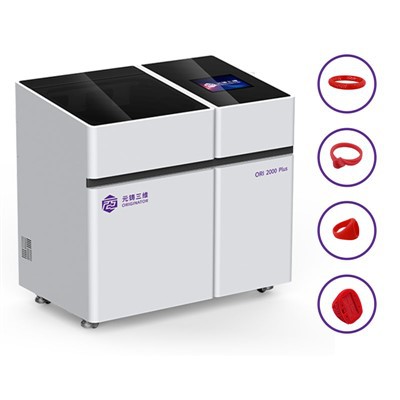
Understanding the Basics of MJP 3D Printing
Before discussing the minimum feature size, it’s essential to understand how MJP 3D printing works. MJP technology operates by jetting tiny droplets of photopolymer material onto a build platform layer by layer. These droplets are then immediately cured by ultraviolet light, creating a solid object. This process allows for high – precision printing, as the printer can control the placement of each individual droplet with extreme accuracy.
The key components that influence the minimum feature size in MJP 3D printing are the print head technology, the material properties, and the software algorithms that control the printing process.
Print Head Technology
The print head is the heart of an MJP 3D Printer. It consists of a series of nozzles that eject the photopolymer material. The size of these nozzles and their ability to precisely control the droplet size play a crucial role in determining the minimum feature size.
Modern MJP print heads are engineered to produce droplets as small as a few picoliters. For example, some of our advanced MJP printers can generate droplets with a volume of around 10 – 20 picoliters. The small droplet size allows for the creation of fine details and thin walls.
The spacing between the nozzles also affects the minimum feature size. A smaller nozzle spacing enables the printer to deposit material more closely together, which is essential for printing small features. Our MJP printers are designed with a high – density nozzle array, which allows for a minimum nozzle spacing of just a few tens of micrometers. This close spacing enables the printer to create features with a high level of detail.
Material Properties
The material used in MJP 3D printing also has a significant impact on the minimum feature size. Photopolymers are the most commonly used materials in MJP, and their viscosity, surface tension, and curing properties all play a role.
Viscosity is a measure of a fluid’s resistance to flow. A lower – viscosity material can flow more easily through the print head nozzles, allowing for the creation of smaller droplets and more precise features. Our MJP printers are compatible with a range of low – viscosity photopolymers that are specifically formulated to achieve optimal print quality at small feature sizes.
Surface tension affects how the droplets of material spread and adhere to the build platform. A material with the right surface tension will form well – defined droplets that do not spread too much, ensuring that the printed features maintain their shape and size.
The curing properties of the photopolymer are also crucial. The material must cure quickly and uniformly under the ultraviolet light to prevent distortion of the printed features. Our advanced photopolymers are designed to have fast and consistent curing characteristics, which is essential for printing small and delicate features.
Software Algorithms
The software that controls the MJP 3D Printer is another key factor in determining the minimum feature size. The software algorithms are responsible for converting the 3D model into a series of instructions for the print head.
These algorithms optimize the printing process by calculating the best path for the print head to follow, the amount of material to deposit at each point, and the timing of the droplet ejection and curing. Advanced software can also compensate for any potential issues, such as material shrinkage or warping, which can affect the accuracy of small features.
Our MJP printers come with state – of – the – art software that uses sophisticated algorithms to ensure the highest possible print quality at small feature sizes. The software allows for precise control over the printing parameters, such as layer thickness, droplet spacing, and curing intensity.
The Minimum Feature Size of MJP 3D Printers
So, what is the minimum feature size that an MJP 3D Printer can print? In general, our MJP 3D Printers are capable of printing features as small as 0.05 mm (50 micrometers). This level of precision is comparable to some of the highest – end stereolithography (SLA) printers, which are also known for their high – resolution printing capabilities.
However, it’s important to note that achieving the minimum feature size depends on several factors, including the complexity of the design, the orientation of the part on the build platform, and the specific material being used. For example, a simple geometric shape with straight lines and right angles is more likely to be printed accurately at the minimum feature size than a complex organic shape with intricate curves and overhangs.
The orientation of the part on the build platform can also affect the minimum feature size. Printing features in a vertical orientation may be more challenging than printing them in a horizontal orientation, as the material may need to be supported more carefully to prevent sagging or collapse.
Comparing MJP with Other 3D Printing Technologies
When compared to other 3D printing technologies, such as fused deposition modeling (FDM) and selective laser sintering (SLS), MJP has a distinct advantage in terms of minimum feature size.
FDM printers work by extruding a thermoplastic filament through a nozzle and laying it down layer by layer. The minimum feature size achievable with FDM printers is typically in the range of 0.2 – 0.4 mm, which is significantly larger than what can be achieved with MJP. This is because the extrusion process in FDM limits the ability to create fine details.
SLS printers use a laser to sinter powdered material together to create a solid object. While SLS can produce high – strength parts, the minimum feature size is usually around 0.1 – 0.2 mm. The powder – based nature of the SLS process makes it more difficult to achieve the same level of precision as MJP.
Real – World Applications of Small Feature Sizes
The ability to print small features with high precision opens up a wide range of real – world applications for MJP 3D Printers.
In the medical field, MJP printers can be used to create custom – made surgical guides, dental models, and microfluidic devices. These applications require extremely small and accurate features to ensure a perfect fit and optimal performance.
In the electronics industry, MJP can be used to manufacture circuit boards, connectors, and miniaturized components. The high – resolution printing capabilities of MJP allow for the creation of intricate traces and patterns that are essential for modern electronic devices.
In the aerospace and automotive industries, MJP printers can produce lightweight and complex parts with small features. These parts can help to reduce weight and improve fuel efficiency without sacrificing strength or performance.
Conclusion and Call to Action
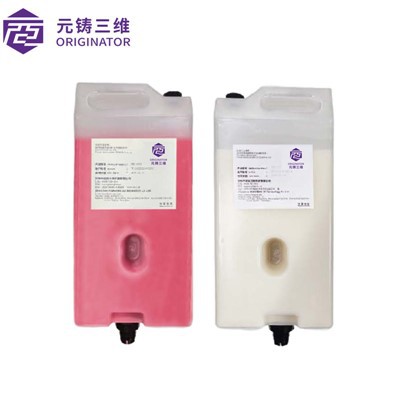
In conclusion, the MJP 3D Printer offers an impressive minimum feature size of 0.05 mm, thanks to its advanced print head technology, compatible materials, and sophisticated software algorithms. This high level of precision makes it a superior choice for applications that require fine details and accurate geometries.
Jewelry 3D Printer If you’re interested in exploring the capabilities of our MJP 3D Printers further or are considering purchasing one for your business, we’d be delighted to have a conversation with you. Our team of experts is ready to answer any questions you may have and guide you through the procurement process. Don’t hesitate to reach out to us for a consultation and start revolutionizing your manufacturing processes with the power of MJP 3D printing.
References
- Gibson, I., Rosen, D. W., & Stucker, B. (2010). Additive Manufacturing Technologies: Rapid Prototyping to Direct Digital Manufacturing. Springer.
- Wohlers, T., & Wohlers Associates. (2018). Wohlers Report 2018: 3D Printing and Additive Manufacturing State of the Industry. Wohlers Associates.
- ASTM International. (2015). Standard Terminology for Additive Manufacturing Technologies. ASTM F2792 – 12a.
Hangzhou Originator 3D Technology Co., Ltd.
Hangzhou Originator 3D Technology Co., Ltd. is one of the most experienced mjp 3d printer manufacturers and suppliers in China. With abundant experience, we warmly welcome you to wholesale high quality mjp 3d printer made in China here from our factory. Contact us for more details.
Address: Room 403, Building 2, Block B, Heda Incubation Park,No. 452, 6th Avenue, Xiasha, Qiantang District,Hangzhou, Zhejiang, China
E-mail: Sales@originator3d.com
WebSite: https://www.originator3d.com/
