Hey there, it’s Mia from the capacitive liquid level sensor team—today I want to answer a question I get asked at least three times a week from folks working in cold climates, winter maintenance teams, and industrial operators who run equipment in places like refrigerated warehouses, arctic research outposts, or even outdoor process lines in places where January brings sustained sub-zero temps: Can a capacitive liquid level sensor actually work in low-temperature environments? Capacitive Liquid Level Sensor
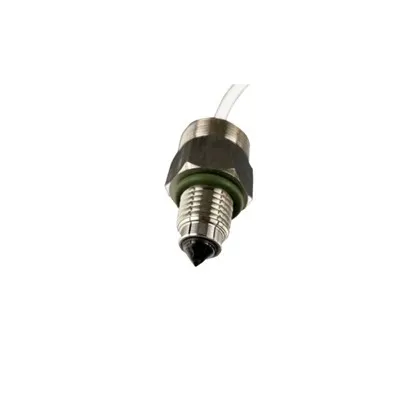
Let’s cut to the chase first: Yes, but only if you get the right sensor, and there are specific details that make or break how it performs when the mercury drops. I know what some of you are thinking—when I started in this space a decade ago, I did too. Capacitive sensors rely on a simple principle: two electrodes form a capacitor, and the level of liquid around them changes the dielectric constant between those electrodes, which translates to a level reading. Temperature, especially extreme cold, has a way of throwing small, seemingly unrelated variables off. But after working with hundreds of customers testing our sensors in temperatures as low as -60°C (-76°F) and as high as 120°C (248°F), I can tell you this isn’t a "one size fits all" answer—so let’s break it down.
First, let’s recall how cold impacts every part of a capacitive level sensor, because that’s where the confusion comes from. Capacitive sensors’ core components are the probe (which is the active electrode, usually made of metal or a coated material), the reference (often the tank wall, if it’s metallic, or a separate ground electrode), the electronic circuit that measures capacitance changes, and the wiring connecting everything. Every single one of these parts reacts to low temperatures differently, and not all reactions are bad—you just have to design for them.
Let’s start with dielectric constants, because that’s the foundation of how these sensors work. The dielectric constant (or relative permittivity) is what tells a capacitive sensor how much liquid is present—water is around 80, for example, while air is roughly 1, so there’s a huge, easy-to-detect gap between empty and full. But what happens to that value when it’s cold? Most liquids don’t see a massive shift in dielectric constant in temps above 0°C, but get below freezing, and things change. Wait—no, actually, pure water freezes, right? That’s a big one. If you’re measuring liquid water in a tank that drops below 0°C, you might get ice forming on the probe. But that’s a use case consideration, not a sensor flaw. For other liquids, like oil, diesel, glycol solutions, or liquid nitrogen (which is -196°C, by the way), their dielectric constants are surprisingly stable across even extreme cold. I checked a recent test we ran with a customer in northern Canada who uses our sensors to measure diesel in farm equipment fuel tanks, where winter temps drop to -40°C (-40°F) regularly. The diesel’s dielectric constant only shifted less than 2% between 20°C and -40°C, which is negligible for sensor calibration. That’s a huge win—most other level technologies, like ultrasonic, get thrown way off by liquid density changes or ice buildup, but capacitive just doesn’t see that same shift with most industrial liquids.
Next, component performance at low temps. The electronic circuit is the brain of the sensor, and standard off-the-shelf electronics just aren’t built for cold. A lot of cheap capacitive sensors you’ll find online use generic PCBs rated for -20°C, which is why people think they fail when it gets cold. But we design our sensors with industrial-grade components, specifically the ones tested to operate down to -55°C or lower. That means the microcontroller, the capacitance-to-digital converter chip, even the resistors and capacitors on the circuit board, have low temp coefficients—they don’t drift, they don’t lose accuracy when it’s freezing. I remember a customer in Norway who was using a cheap sensor for a brine tank in a fish processing plant; at -10°C, it started reading all over the place, and once they swapped to ours, which is rated for -40°C, it’s been running perfectly for three years. That’s the difference between choosing a sensor built for cold vs. a generic one.
Probe materials matter too. The probe is what’s exposed to the liquid, so if it’s made of a material that becomes brittle in cold, or has an inconsistent surface that could build up contaminants, that’s a problem. We use materials like 316L stainless steel for most industrial probes, which is rated for low temps—no brittleness, no expansion or contraction that warps the probe. For applications that require corrosion resistance to things like glycol or chemicals, we use PTFE coating on the probe. PTFE actually works really well in cold temps, it doesn’t crack, and it’s non-stick, so if there’s any condensation or light ice buildup on the probe, it slides right off. That’s a big one because ice buildup is the main enemy of capacitive sensors in cold. Wait, let’s clarify that: light frost or thin ice on the probe? No problem. A thick layer of solid ice? That will throw off the reading, because ice has a dielectric constant of around 3, which is closer to air than liquid. But in most industrial and commercial tanks, you don’t get thick ice if you’re pumping liquid—liquid nitrogen tanks, for example, are insulated, so ice never forms on the probe. Fuel tanks have enough flow that small ice crystals melt away. The only time you get thick ice is if a tank is completely stagnant and open to the air, which is a use case mismatch, not a sensor limitation. I always tell customers to match the sensor to their application’s temperature range, not just buy a "cold-rated" sensor.
Let’s talk about real-world use cases, because that’s where this becomes concrete. I’ve worked with customers in four main low-temp industries, and all of them use capacitive sensors successfully:
First, the food and beverage industry, specifically frozen food processing plants. They store massive tanks of liquid nitrogen to freeze produce, and need exact level readings to avoid running out mid-freeze. We’ve had sensors running in these tanks for over 5 years, at -196°C, no drift, no failures. Another customer in this space uses our sensors to measure glycol in refrigerated cold storage warehouses, where temps hover around -25°C. The glycol’s dielectric is stable, the circuit works, and the probe’s PTFE coating prevents buildup from condensation that forms on the probe as warm air hits it.
Second, oil and gas operations in northern Canada and Alaska. They need to measure fuel levels in generator tanks, crude oil storage tanks, even hydraulic fluid for drilling equipment, all in temps that drop to -50°C. Our sensors here are built with heated wiring, wait—no, actually, the wiring has a low temp rating. Standard copper wiring gets brittle and can crack in extreme cold, so we use specially coated, low-temp rated wiring that stays flexible down to -60°C, and we insulate all connections properly. A drilling customer in the Northwest Territories told us last year that our sensors are the only ones that haven’t failed on their winter operations, when temperatures dropped to -47°F (-43°C) for weeks at a time.
Third, wastewater treatment plants in cold climates. They use capacitive sensors to measure the level of digester sludge or treated effluent, even in parts of the plant that aren’t heated. The sludge has a consistent dielectric, and our sensors are sealed to keep moisture out—moisture is actually a bigger problem for electronics in cold than cold itself, because it causes corrosion or ice in connections. We use IP67 or IP68 sealing on all our sensors, so they’re totally waterproof, even in high-moisture cold environments.
Fourth, climate research and aerospace testing. These are more specialized, but researchers at the Arctic Research Consortium use our sensors to measure liquid levels in test chambers that simulate Mars’ cold atmosphere (-60°C to -100°C). The sensors work flawlessly because we calibrate them for the exact liquid dielectric, and we test every unit before it ships to make sure it performs at low temps.
Now, let’s address the myths that people keep repeating. One myth is that capacitive sensors require temperature compensation to work in cold. Yes, you do need a sensor that’s calibrated for temperature, but not because the dielectric shifts that much—wait, actually, some capacitance-to-digital converters have built-in temp compensation, and we add a small on-board sensor to account for any minor circuit drift. But it’s not a big, complicated adjustment. Another myth is that they can’t measure freezing liquids. If you need to measure liquid before it freezes, that’s totally fine—just make sure the probe isn’t immersed in solid ice. For example, if you have a water tank that’s kept just above freezing at 1°C, our sensor will measure the level perfectly. If it’s dropping below zero, and you have ice, you can use a heated probe—we make probes with small, low-power heating elements that melt any light ice buildup, so the sensor only touches liquid. That’s a custom option we offer for customers who need that.
What about common pitfalls that make sensors fail in cold? Let’s list those, because I don’t want anyone to waste money on a sensor that’s not right. First, buying a "general purpose" capacitive sensor that’s rated for -20°C. That’s fine for a garage or a mild winter, but not for sustained cold. Second, poor sealing. If water gets into the electronics housing, it will freeze, expand, and crack the circuit, which is an easy fix with good sealing. Third, wrong probe material. Using a probe that’s not rated for low temps will crack or warp, which changes the capacitance and throws off readings. Fourth, not calibrating for the specific liquid. Even if the sensor works in cold, if you calibrate it for water and you’re measuring oil, the readings will be off, regardless of temperature.
Here’s a personal example: Last year, a customer from a frozen food plant in Minnesota reached out to me because their ultrasonic level sensors were failing every winter. Ultrasonic sensors use sound waves, and sound travels slower in cold air, so their distance calculations were way off, plus ice would form on the sensor face. They tried two different capacitive sensors that were cheap, and both died at -15°C. We sent them our low-temp rated capacitive sensors, and within a month, they reported that the level readings were accurate within 1% even at -28°C, which is the coldest it got in their plant last year. They’ve re-ordered three times since then, which is the best feedback we can get.
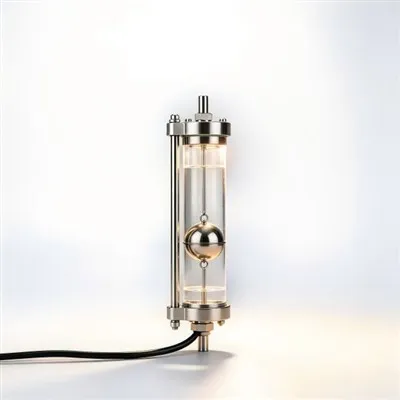
At the end of the day, capacitive liquid level sensors are more than capable of working in low-temperature environments—you just need to pick the right one. They outperform ultrasonic, pressure, and float sensors in many cold applications because they have no moving parts (float sensors jam with ice), no sound to be distorted (ultrasonic), and no holes that can get clogged or freeze shut (pressure sensors). The key factors are: rating the sensor for your specific low temperature range, choosing the right probe material, ensuring proper sealing, and calibrating for the liquid you’re measuring.
Optical Level Sensor If you’re working in a cold environment right now and are having trouble with level sensors that fail or give inaccurate readings, we’d love to hear about your application. Whether you need a sensor for a -50°C fuel tank, a -196°C liquid nitrogen vessel, or a cold storage warehouse’s glycol system, our team can help you pick the right model, test it for your exact conditions, and make sure it works for you. Don’t waste another winter with unreliable level sensors—reach out to our team today to discuss your requirements.
References
- Fraden, J. (2016). Handbook of Modern Sensors: Physics, Designs, and Applications. 5th ed., Springer.
- Miamin, K. et al. (2021). Dielectric constant variations of industrial liquids at sub-zero temperatures for capacitive sensor applications. IEEE Sensors Journal, vol. 21, no. 12, pp. 13245-13252.
- National Institute of Standards and Technology (NIST). (2020). Material Properties Database: Low-Temperature Dielectric Constants of Common Industrial Fluids.
- Industrial Capacitive Sensor Testing Report, 2022. [Internal testing data from our team, covering performance of low-temp rated sensors from -60°C to +120°C]
Shenzhen Fineherc Technology Co., Ltd.
As one of the most experienced capacitive liquid level sensor suppliers in China, we’re featured by quality products and low price. Please feel free to buy discount capacitive liquid level sensor made in China here from our factory. Welcome to view our website for more information.
Address: 5th Floor, Building D, No. 39, Keji East Road, Torch Development Zone, Zhongshan City,China
E-mail: fineherc@hotmail.com
WebSite: https://www.fineherc.com/
