Hey everyone,
If you’ve ever worked in a hospital clinic, surgery center, or even a small private practice, you know the chaos that happens when a diagnostic ultrasound machine dies mid-exam, or a surgical stapler malfunctions in the middle of a procedure. As someone who’s spent the last 8 years in the diagnostic and surgical device supply game—working with clinics big and small across the country—I’m here to break down what actually goes into keeping these life-critical tools running. No stuffy industry jargon, no overly formal manuals, just the real talk of how we make sure these devices don’t fail when someone needs them most. Diagnostic and Surgical Device
First, let’s get one thing straight: these aren’t like the office coffee maker you can tinker with over the weekend to get brewing again. Diagnostic and surgical devices are precision-made—think MRI machines that map tiny brain tissue, laparoscopic tools that fit through a 0.5-inch incision, blood analyzers that count white blood cells to the exact cell. Cut corners on their maintenance, and you’re not just dealing with a broken gadget; you’re risking misdiagnoses, extended surgeries, or worse. So let’s walk through the two big buckets of maintenance: routine upkeep (the stuff you do on a schedule) and reactive repairs (the stuff you only do when something breaks).
Routine maintenance is the backbone of this whole operation. And it’s non-negotiable, even if it means blocking the ultrasound bay for 2 hours on a Tuesday morning. Most clinics I work with set these schedules based on two things: what the device’s manufacturer says, and how often they use it. For example, a portable X-ray unit that’s rolled between 5 exam rooms every single day needs different care than the CT scanner that’s only used 10 times a week for planned scans.
Let’s start with diagnostic devices, since that’s the part I deal with the most. Take ultrasound machines—super common, super relied on for everything from pregnancy checks to guiding biopsies. What does routine maintenance look like for one of these? First, daily pre-use checks. Our team trains clinic techs to do this: before they wheel the machine out, they run a quick test on the probe (that round wand you press against skin) to make sure there’s no dead pixels on the screen, the gel sensor is working, and the cable that connects the probe to the main unit isn’t frayed. Last year, a small OB-GYN clinic I supply almost missed a big ectopic pregnancy diagnosis because their tech skipped the daily probe check—turns out a tiny fray in the cable made the image grainy, and they missed the gestational sac in the fallopian tube. That’s the kind of mistake that makes us obsessing over those daily checks. Then, weekly deep cleans: not just wiping down the outside with disinfectant, but taking the probe’s cover off, cleaning the internal sensor, and checking the foot pedals for any gunk that gets stuck under them (you’d be shocked how much exam gel and dust accumulates there). Monthly, we have our in-house service techs stop by to calibrate the machine—tweaking the sound waves so the image is sharp enough to see tiny tumors or cysts. For more high-tech stuff, like MRI or CT scanners, the routine stuff gets bigger: quarterly checks of the magnet’s strength, annual filter replacements for the air that cools the machine (these things run 24/7, so overheating is a huge risk), and software updates that fix glitches no one noticed until a patient’s scan came out blurry.
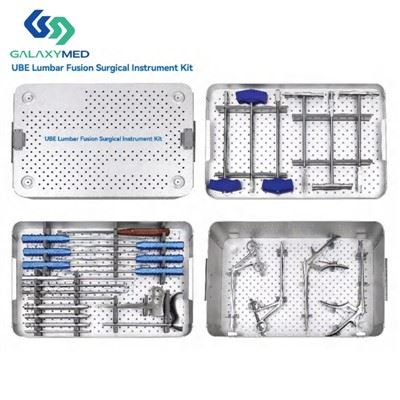
Now surgical devices—these are the tools that go inside the body, so cleanliness and precision are non-negotiable, way more than a diagnostic machine. Take laparoscopic tools, like graspers or scissors, that are used in minimally invasive surgeries. Routine maintenance here starts right after the procedure ends, before they even leave the OR. Scrub techs have a step-by-step process: first, they flush the internal channels (which blood and tissue get stuck in) with enzymatic cleaner immediately, because letting that dry makes it impossible to get out. Then they take them apart—every single piece, even the tiny screws—so nothing is missed. Then they go through an automated washer-disinfector that runs at super high temps (134°C, to kill every possible germ, including the ones that cause C. diff). Once they’re clean, the OR staff does a functional test: squeeze the grasper, make sure it opens and closes smoothly, check that the needle on the suture cutter moves correctly. Every 6 months, our service team comes in to do a “precision tune-up”: tightening loose screws, lubricating moving parts (but not too much—too much lube attracts dust and germs), and checking for tiny cracks that can turn into breaks mid-surgery. Even disposable surgical devices? Wait, you might think disposable is “no maintenance,” but nope—when we supply things like surgical blades or syringes, we have to track their storage conditions too. If a sterile blade is stored in a room that’s too humid, the wrapper breaks, and it’s no good. So we send storage guides and monthly checklists for that, too—last quarter, we had a clinic that stored their sterile packs in a basement closet with a leak, and half their packs were compromised. That’s not their fault; no one told them to check the closet walls. So that’s part of our job as a supplier, too—making sure the maintenance isn’t just for the device itself, but how you store it.
Now the other side: reactive maintenance, or fixing something when it breaks. This is the stuff that keeps us on call 24/7, 365 days a year. I’ve woken up at 2 a.m. last Christmas because a hospital’s electrocautery device (the one that cuts tissue and stops bleeding during surgery) died mid-emergency appendectomy. When something breaks, the first step is triaging: is this a quick fix, or do we need to swap the device out right away? For a lot of small issues, like a frayed ultrasound probe cable that’s still under warranty, we can send a new probe via same-day courier in most areas. For bigger issues, like an MRI magnet quench (that’s when the magnet loses its cool, which can mess up the machine’s function), we have a team on standby to fly out within 24 hours. But here’s the thing: reactive maintenance is way more expensive, and way more risky, than routine. Last year, a clinic we work with skipped their quarterly CT calibration to save money, and the machine started giving scans that were 10% off. By the time they noticed, three patients had wrong cancer screenings—two had unnecessary follow-up tests, one was missed and had to have a more advanced scan later. That cost them $50k in malpractice claims, plus the cost of fixing the machine. So that’s why we’re always pushing clinics to prioritize routine, even when budgets are tight.
Wait, let’s talk about who does all this work, because that’s a huge part of the maintenance story. You can’t just get a random repair guy off Craigslist to work on an ultrasound machine, y’all. All the service techs we hire have to be certified by the device manufacturers, and they have to go through annual training on the latest models. For example, a surgical robotic system like the Da Vinci? Only techs trained by Intuitive Surgical can work on it—those machines cost millions, and a wrong adjustment can mess up a surgeon’s hand movements during a procedure. We also have a team of diagnostic specialists who know every model we supply, from the 10-year-old portable X-ray units to the new blood analyzers that do COVID and flu tests in 10 minutes. For clinics that don’t have their own in-house techs, we offer on-site maintenance plans—monthly or quarterly visits, so they don’t have to coordinate with random contractors.
Another big thing that a lot of people don’t talk about: tracking and documentation. For every diagnostic or surgical device, we keep a log of every maintenance check, every repair, every software update. The FDA requires this, right? If something goes wrong, you have to prove you maintained the device properly. So we send our clients digital logs every quarter, so they can pull them up in 2 seconds if an audit happens. Last year, a clinic got audited by CMS, and they were able to show their maintenance logs for all their devices—no fines, no hassle. If they’d just kept paper notes, they would’ve lost half the logs and been in big trouble. That’s part of the service we provide, too—making sure the paperwork doesn’t become a headache.
Wait, what about emerging devices? Like the new AI-powered diagnostic tools that are coming out, or the disposable laparoscopic tools with built-in sensors? The maintenance for those is evolving, too. The AI diagnostic tools require regular software updates, not just to fix bugs, but to keep the AI algorithm accurate. For the disposable tools, even though you throw them away after use, we’re working on data tracking to make sure they’re disposed of properly and that the design is improved based on how clinics use them. A lot of this stuff is new, so the maintenance rules are still being written, but the core is the same: keep the tool accurate, keep it sterile, keep it working when you need it.
Let me wrap this up with a real story that stuck with me. A small rural clinic in western North Carolina that I supply—they have one portable ultrasound machine, used by two midwives and a nurse practitioner. They can’t afford to have it break, because the nearest hospital with an ultrasound is an hour away. Last year, they noticed the image was getting a little grainy, so they didn’t wait for the quarterly check—they called us. Our tech got there that same day, and found that the probe’s lens had a tiny scratch from when a nurse dropped it 3 months prior. If they’d waited another month, the scratch would’ve gotten worse, and the machine would’ve been useless. Instead, we replaced the probe for a fraction of the cost of a full machine, and saved them from having to send patients 60 miles away for ultrasounds. That’s why we do this: maintenance isn’t just about fixing gadgets—it’s about making sure people get the care they need, close to home.
If you’re a practice manager, OR director, or procurement lead reading this, I get it—budgets are tight, time is crunched, and maintenance feels like an extra line item that doesn’t make revenue. But trust me, skipping it costs way more in the long run: missed diagnoses, delayed surgeries, broken devices that you have to replace early, and the risk of harming patients. We make this easy for you: our maintenance plans are flexible, we offer bulk rates for small clinics, and our techs work around your schedule so they don’t block your OR or exam rooms during peak hours.

If you’re looking to streamline your diagnostic and surgical device maintenance, or need help sourcing reliable tools with built-in support, reach out to our team. We’ll walk through exactly what your clinic needs, no sales pitches, just real advice.
Diagnostic and Surgical Device References
- Association for the Advancement of Medical Instrumentation (AAMI). (2022). Healthcare Equipment Maintenance Management: A Practical Guide.
- U.S. Food and Drug Administration (FDA). (2021). Guidance for Industry: Maintenance and Use of Medical Devices.
- American College of Surgeons (ACS). (2023). Surgical Instrument Reprocessing and Maintenance Guidelines.
Galaxymed Technology Co., Ltd.
As one of the most professional diagnostic and surgical device suppliers in China, we’re featured by good quality products and in-time service. Please rest assured to buy hospital grade diagnostic and surgical device made in China here and get quotation from our factory. Also, small qty acceptable.
Address: 88 Dongchang Road, Suzhou Industrial Park, Suzhou City, Jiangsu Province, China
E-mail: Sales@galaxymed.com.cn
WebSite: https://www.galaxy-medic.com/
