If you’ve ever walked the floor of our PCBA workshop at 2 a.m. – which some of our night-shift team members have, during a crunch for a medical device client – you’d know that turning a digital circuit schematic into a working, assembled printed circuit board is far more than just soldering parts together. Every step of the process carries hidden costs that can make or break a project, and as a PCBA supplier, we’ve spent years tracking these variables to give clients honest, transparent pricing that doesn’t end with a surprise mid-production invoice. I’m going to break down the core cost factors we weigh for every order, from the first time a client sends over their Gerber files to the day the finished boards ship to their door. PCBA
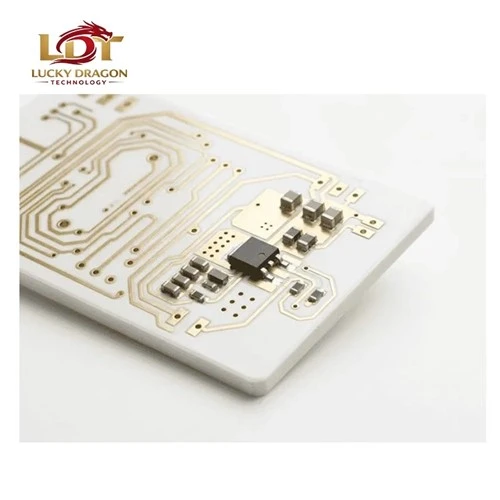
Let’s start with the foundation: the bare PCBA itself, or the printed circuit board substrate. This isn’t just a flat piece of fiberglass – material selection here is make-or-break. For most consumer electronics, FR-4 fiberglass epoxy is the go-to, it’s affordable, reliable, and works for general use. But if you’re building a high-frequency 5G antenna or an aerospace component that needs to withstand extreme temperatures, you can’t use standard FR-4. High-performance materials like Rogers or Arlon have better thermal stability and dielectric properties, but they cost 3 to 10 times more than FR-4, depending on thickness and grade. Then there’s board size and complexity: a simple 2-layer board for a smart sensor might measure 2×3 inches, but a 16-layer board for a medical imaging device could be 6×8 inches with blind and buried vias – tiny holes that only go partway through the board, instead of all the way. More layers mean more material, more intricate manufacturing processes, and a much higher base cost. We recently quoted a client a 4-layer FR-4 board for $1.20 per unit, and a 12-layer Rogers board for the same application came in at $18.70 per unit, just for the bare board. That’s a massive gap, and it’s one of the first cost factors we flag with clients early on, before they get too invested in a design that’s overkill for their end product.
Next up is component sourcing, which is where most of the hidden costs creep in. We’ve had clients come to us with a BOM (bill of materials) full of obsolete parts, parts with long lead times, or counterfeit components – and that’s when the price starts to jump. First, part availability: if a component is currently in high demand (think of the microcontroller shortage we had back in 2021, when an 8-cent part was selling for $2), we have to either source it through a premium distributor or suggest a pin-compatible alternative, which might have slightly different specs and require design tweaks. Obsolete parts are even trickier: if a part has been discontinued for 10 years, we might have to buy a full full reel of 10,000 units, even if the client only needs 500, because that’s the minimum order quantity (MOQ) the distributor will accept. That extra inventory cost gets passed on, and sometimes it makes a small project unfeasible unless we can work with the client to redesign their BOM. Then there’s part type: passive components like resistors and capacitors are cheap, but integrated circuits (ICs), microcontrollers, connectors, and special parts like high-precision sensors can make up 60-70% of the total PCBA cost. A single high-end FPGA, for example, can cost $500 per unit, whereas a standard through-hole resistor is 0.01 cents. We always review the BOM with clients to flag high-cost parts and suggest alternatives that meet their performance needs without breaking the bank.
The assembly process itself is another major cost driver, and it all boils down to how the parts are placed and soldered. First, through-hole vs. surface-mount technology (SMT). Through-hole parts, where leads are inserted through holes in the board and soldered on the other side, are more durable for applications like power tools or industrial equipment, but they’re slower to assemble – each part has to be hand-placed, which means higher labor costs. For a simple board with 10 through-hole parts, we might charge $0.50 per unit for assembly, but for a board with 100+ through-hole parts, that could jump to $5 per unit. SMT is faster and cheaper for high-volume orders, because automated pick-and-place machines can place thousands of parts per hour, but it requires precise stencil design and well-calibrated equipment. The density of the board also matters: a board with parts packed tightly together (high component density) requires more precise placement, more inspection time, and sometimes specialized equipment like fine-pitch pick-and-place machines for tiny 0201 components or microBGAs. We had a client last year with a board that had 0.4mm pitch ICs – that’s parts so small, the leads are barely visible to the naked eye. Assembling that required our senior techs to run extra quality checks, which added $0.30 per unit to the assembly cost, but it was worth it to avoid the cost of reworking or scrapping a board with a misplaced part.
Then there’s testing and quality assurance (QA), a non-negotiable cost for any PCBA supplier, but one that varies widely based on client requirements. The most basic test is an in-circuit test (ICT), where a probe touches points on the board to check for open circuits, short circuits, and incorrect parts. That’s standard for most orders, and it adds a small per-unit cost. For boards that go into critical applications like medical devices or automotive parts, we also do functional testing, where we power up the board and simulate its end-use to make sure it works as intended. Functional testing is much more time-consuming: we have to build custom test fixtures for each board design, which can cost $1,000 to $10,000 upfront, depending on complexity. That fixture cost gets amortized over the number of units, so a 1,000-unit order would have a $1 per unit fixture cost, while a 10,000-unit order would bring it down to $0.10 per unit. For high-risk industries, some clients also require X-ray inspection for hidden joints, like under BGAs, to make sure there are no solder voids that could cause failure. X-ray testing adds another $0.20 to $1 per unit, but it’s a must for aerospace and automotive clients where a board failure could be dangerous. We always present testing options clearly to clients, so they can choose the level of QA that fits their needs and budget, instead of paying for testing they don’t need.
Volume and lead time wrap up the main cost factors, and they’re often the most flexible. Let’s start with volume: most PCBA suppliers offer tiered pricing, where the per-unit cost drops as order quantity increases, because fixed costs (like setup, testing fixtures, and programming) are spread over more units. A prototype order of 50 units might have a total cost of $1,000, while a 10,000-unit order for the same design might cost $0.80 per unit, total $8,000 – that’s a massive difference because we’re not charging for the extra setup and fixture work over so many units. Lead time works the same way: if a client needs boards in 1 week instead of our standard 2-week lead time, we have to prioritize their order, run overtime, or pay premium for parts or production slots, which adds a 20-50% rush fee. We recently had a client who needed 500 boards for a trade show in 10 days instead of the usual 15, so we expedited their BOM, ran a double shift in the workshop, and the total cost was 35% higher than their original quote. We always warn clients about rush fees upfront, so they can plan accordingly, but sometimes urgent needs require that extra cost.

There’s also a hidden cost we’ve seen all too often: rework and scrappage. If a design has errors in the Gerber files, or a part is the wrong value, that leads to reworking the board – desoldering the wrong part, soldering the correct one, and re-testing – which adds time and cost. Scrappage is another factor: every production run has a small percentage of boards that can’t be fixed, from a misplaced solder joint to a bad batch of parts. For most standard orders, scrappage is 1-2% of total units, but for high-complexity boards or prototype runs, it can be 5-10%. We include a small buffer for scrappage in our quotes, but if a client’s design has frequent errors, that buffer gets eaten up, and we have to charge extra for rework. That’s why we always offer prototype runs first – it’s worth spending a little extra on a prototype to catch design flaws early, instead of having to rework hundreds of full production boards later.
PCBA As a PCBA supplier, our goal isn’t just to make a profit – it’s to give clients accurate, fair pricing that reflects the actual work and materials that go into their boards. We don’t believe in hidden fees or surprise charges; every cost factor is discussed upfront, before any work starts. Whether you’re a startup building your first prototype, an industrial manufacturer scaling a product line, or a medical company needing compliance-certified boards, we take the time to walk through each of these cost factors with you, explain why a certain choice affects the price, and help you find the sweet spot between quality, performance, and budget. If you’re ready to start a new PCBA project and get a transparent quote, we’re here to listen to your needs, review your design and BOM, and work with you to find the right solution for your project.
Lucky Dragon Technology Shenzhen Co., Ltd.
With abundant experience, we are one of the most professional PCBA manufacturers and suppliers in China. We warmly welcome you to buy bulk high quality PCBA for sale here from our factory. If you have any enquiry about cooperation, please feel free to email us.
Address: 5th Floor, Building 1, Jinshan Industrial Park, 375, Xixiang Section, Guangshen Road, Xixiang Street, Baoan District, Shenzhen City, Guangdong Province, China
E-mail: sales@Ldtac.com
WebSite: https://www.ldtac.com/
