If you’ve ever visited a workshop that fabricates glass for residential windows, commercial storefronts, or even custom smartphone screens, you’ve likely spotted a glass grinding machine humming in a corner. For those of us who supply this equipment, one of the first questions we get from new customers—whether they’re a small glass shop owner just expanding their services or a large manufacturing facility scaling production—isn’t about blade speed or software integration. It’s simple: what’s the actual weight of a glass grinding machine? Glass Grinding Machine
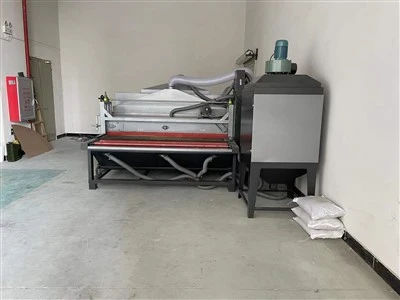
I get it. When you’re planning a workshop layout, fitting new equipment around existing machinery, or making sure you have the right floor reinforcement to avoid long-term damage, weight matters. I’ve seen customers underestimate this and end up with a machine that can’t fit through their loading door, or overestimate it and waste budget on unnecessary floor retrofitting. Over 12 years of supplying glass grinding machines, I’ve answered this question hundreds of times, so let’s break it down by the type of machine, the features it includes, and the science behind why weight varies so much.
First, let’s start with the basics: a glass grinding machine’s weight isn’t a random number pulled from a manual. It’s directly tied to its core function, which is to smooth, shape, and refine the edges of cut glass panels. The heavier a machine, the more stable it is during operation—too much vibration from a lightweight machine can leave uneven edges, chips, or even cracks in expensive glass, especially when working with large or thin panes. That’s why weight isn’t just a logistical detail; it’s a performance feature.
Let’s categorize the most common glass grinding machines we supply, because that’s how most customers shop, and weight changes drastically between each.
The first type is the portable glass grinding machine. These are the small, hand-held units or compact tabletop models designed for on-site repairs, or for small glass shops that work with small batches of residential glass (like shower doors or mirror edges). A portable model typically weighs between 15 and 40 kilograms. The lighter end is the hand-held unit, which is around 15 to 20 kg—light enough for a single operator to carry up a flight of stairs for a home repair, but stable enough for small edge work. The tabletop portable models, which sit on a workbench and use a small clamp to hold the glass in place, weigh around 30 to 40 kg. We recommend these for beginners or shops that only run glass for a few hours a day, since their smaller motor and grinding wheels mean less power, but easier maneuverability.
Next is the semi-automatic linear glass grinding machine. This is the workhorse for most medium-sized glass fabrication shops. These machines are designed to process long, straight edges on glass panels, and they run along a linear track, so the glass moves through the machine instead of the grinding head moving around. Semi-automatic models are one of our most popular sellers, and their weight ranges from 500 to 1,800 kilograms. The lower end, around 500 kg, is for shops that work with small to medium panels (up to 2 meters in height) and only process a few panels a day. The mid-range models, around 1,000 kg, can handle panels up to 3 meters tall and run up to 10 hours a day, with features like automatic feed and adjustable grinding pressure. The heaviest semi-automatic models, at 1,800 kg, are for high-volume shops that process 20+ panels a day, with multiple grinding heads for smoothing, polishing, and chamfering all in one pass. The extra weight here comes from the heavy cast iron base that eliminates vibration—when you’re grinding 10mm thick glass for storefronts, even a tiny vibration can leave a wavy edge that gets rejected by a client.
Then there’s the fully automatic CNC glass grinding machine, which is the big player for large-scale manufacturing facilities that produce custom glass for skyscrapers, automotive windshields, or smart glass. These machines are controlled by a computer, so they can grind complex, custom shapes (like curved windshields or notched edges for window frames) with perfect accuracy. The weight of a CNC glass grinding machine is significantly higher than semi-automatic models, ranging from 3,000 to 8,000 kilograms. I’ve installed a few of these for large facilities, and the smallest CNC model we supply is around 3,000 kg for shops that run 24 hours a day on medium-sized panels. The full-size CNC machines, which can handle panels up to 10 meters long and 3 meters wide, weigh up to 8,000 kg. The reason for this extreme weight is the rigid steel frame, heavy-duty linear rails, and multiple high-torque motors that move the grinding heads with sub-millimeter precision. You can’t get that level of accuracy with a lightweight frame—there’s just too much force required to move the grinding wheels at high speed over large glass panels, and the weight keeps the entire system from shifting.
Now, let’s talk about the factors that add extra weight to these machines, because not all glass grinding machines are built the same. One of the biggest factors is the base material. As I mentioned earlier, cast iron is the gold standard for machine bases because it dampens vibration better than steel or aluminum. A cast iron base adds 20 to 50% more weight than a steel base, but it’s worth it for consistent grinding quality. Another factor is the number of grinding stations. A basic semi-automatic machine has 2 or 3 stations (for rough grinding, fine grinding, and polishing), while a high-end model has 5 or 6 stations, each with their own motor and grinding wheel, so that adds extra weight. Features like automatic glass loading, water cooling systems (for the grinding wheels to prevent glass from cracking), and dust extraction units also add a few hundred kilograms, depending on the machine size.
I’ve seen customers get tripped up by the difference between shipping weight and installed weight, which is an important detail to note. When we ship a semi-automatic machine, it’s partially disassembled to fit through standard loading doors, so the shipping weight is about 10 to 15% less than the fully assembled installed weight. For example, a 1,000 kg fully assembled semi-automatic will ship at around 850 kg, because we remove the grinding heads and some of the smaller components to avoid damage during transit. The fully installed weight, which includes adding the water tank, dust extraction unit, and any optional accessories, is about 50 to 100 kg more than the base assembled weight. That’s a key point for planning your workshop—you don’t want to get a shipping weight that seems manageable, only to find out the fully installed weight is too much for your floor.
Now, let’s address a common misconception: a heavier machine isn’t always better, but it is for the job you need it to do. If you’re a small repair shop working on shower doors and mirrors, a 15 kg portable unit is more than enough, and a 5,000 kg CNC machine would be overkill and a waste of budget. On the flip side, if you’re a manufacturer producing glass for a local housing development, a 500 kg semi-automatic machine would be too slow, and you’d end up with inconsistent edges that lead to more rejects than a heavier, high-volume machine. That’s why our team doesn’t just send customers a spec sheet with a weight number—we ask them about their daily production volume, the size of glass panels they work with, and the types of edges they need to grind, so we can recommend the right machine for their needs.
I want to give a quick example of a mistake a customer made a few years ago. A small glass shop in suburban Chicago reached out to us, saying they needed a glass grinding machine for their new project: installing custom glass patio enclosures. They measured their loading door, calculated the space in their workshop, and ordered a semi-automatic machine based on its shipping weight of 900 kg. When the machine arrived, they tried to move it into their workshop, but their loading door was only 1.8 meters wide, and the fully assembled machine was 1.9 meters wide, even with the packaging. They had to pay extra for a team to lift it onto a flatbed and bring it to their other workshop location, which added $1,200 to their total cost. We could have avoided that if we had asked them to confirm their loading door dimensions and workshop space before they ordered—something we always do now with new customers.
Another example: a large automotive glass manufacturer in Detroit ordered a CNC glass grinding machine, and they were worried about their floor holding the weight of 7,500 kg. We worked with their structural engineering team to calculate the floor load capacity, and we recommended a model that was 1,000 kg lighter than what they initially planned, because their floor could only support 6,000 kg per square meter, and the heavier model would have required $20,000 in floor reinforcement. That’s the value of having a supplier who doesn’t just sell you a machine, but helps you plan for the weight and logistics.
So, to sum up the weight of a glass grinding machine: it ranges from 15 kg for portable, hand-held units up to 8,000 kg for full-size CNC models, depending on the type, size, and features of the machine. The best way to find the right weight for your needs is to talk to a supplier who understands glass fabrication, not just a spec sheet.

At the end of the day, weight is just one part of the equation. You need a machine that grinds consistent edges, fits your workshop, and fits your budget. If you’re in the market for a glass grinding machine and want to get accurate weight details, or need help planning your workshop layout to accommodate the machine, reach out to us for a consultation. We’ll walk you through the different types, their weights, and help you find the perfect fit for your business.
Glass Washing Machine References
- Glass Fabrication Machinery: Operation, Performance, and Maintenance. Society of Glass Technology, 2019.
- Industrial Machine Design: Vibration Control and Structural Stability. CRC Press, 2021.
- "Selection Guide for Glass Processing Equipment." Glass Magazine, Vol. 65, No. 4, 2020, pp. 32-37.
- "Structural Requirements for Heavy Industrial Machinery Installation." American Society of Civil Engineers, 2018.
Foshan Sky Glass Co., Ltd.
We are one of the most experienced glass grinding machine manufacturers and suppliers in China. With a professional production team, we are able to meet the needs of the majority of our customers. Please feel free to wholesale advanced glass grinding machine for sale here from our factory. Customized orders are welcome.
Address: Jian Mei Business Center, Nan Hai Town, Fo Shan
E-mail: skyglassmanager18@gmail.com
WebSite: https://www.sky-glassdz.com/
